

The Acne Has Cleared up, So Why Are the Scars Still There?
Many people mistakenly assume that acne scars are merely superficial discoloration or minor marks left on the skin surface. Factually, once severe acne pustules subside, the deep dermal collagen network has already suffered irreversible structural damage. This is precisely why relying on standard skincare products or topical ointments alone rarely yields visible improvement for depressed atrophic acne scars.
More importantly: not all acne scars are identical. To treat separate types and severity levels of rigid scar tissue and localized volume loss, specific targeted clinical methods must be utilized. Prior to choosing any laser treatment blindly, you must understand your explicit scar profile to identify the correct corrective pathway.
Stage 1: Identify Your Explicit Scar Type
Atrophic acne scars (depressions) are clinically classified into three core structural categories. During a professional diagnostic assessment, the physician uses side-angle lighting to measure the true extent of tissue drop across your face:
Ice Pick Scars
💡 Your Real Pain Point Presentation: Upon close self-inspection in a mirror, you can clearly identify scattered, deep pinhole tracts that makeup foundation cannot flatten out.
Boxcar Scars
💡 Your Real Pain Point Presentation: Because its perpendicular edges cast prominent shadows, these deep crater fields remain highly apparent even after applying a full-coverage makeup foundation.
Rolling Scars
💡 Your Real Pain Point Presentation: Looking directly into a mirror, your skin may appear relatively uniform. However, when turning your head sideways under sharp spot-lighting or viewing your face in a car mirror, broad wave-like shadows become prominent.

The Complex Reality of "Mixed Acne Scarring"
Clinical data demonstrates that isolated single-pattern scar presentations are exceedingly rare among patients with histories of moderate-to-severe nodulocystic acne. In most real-world cases, a patient's face presents a complex mixture of ice pick, boxcar, and rolling scars overlapping concurrently. Because these separate typologies involve distinct levels of skin damage and depth of anchoring, a single laser method cannot address all layers efficiently. This forms the foundational medical reason why you require a tailored "Combination Layered Strategy."
Stage 2: Dermal Base Assessment — Grading Your Scar Severity
Prior to engineering your custom therapeutic map, our physicians must rigorously evaluate the global tissue deficit and grade your skin's level of collagen loss:
1. Mild Acne Scarring
.jpg)
2. Moderate Acne Scarring
.jpg)
3. Severe Acne Scarring
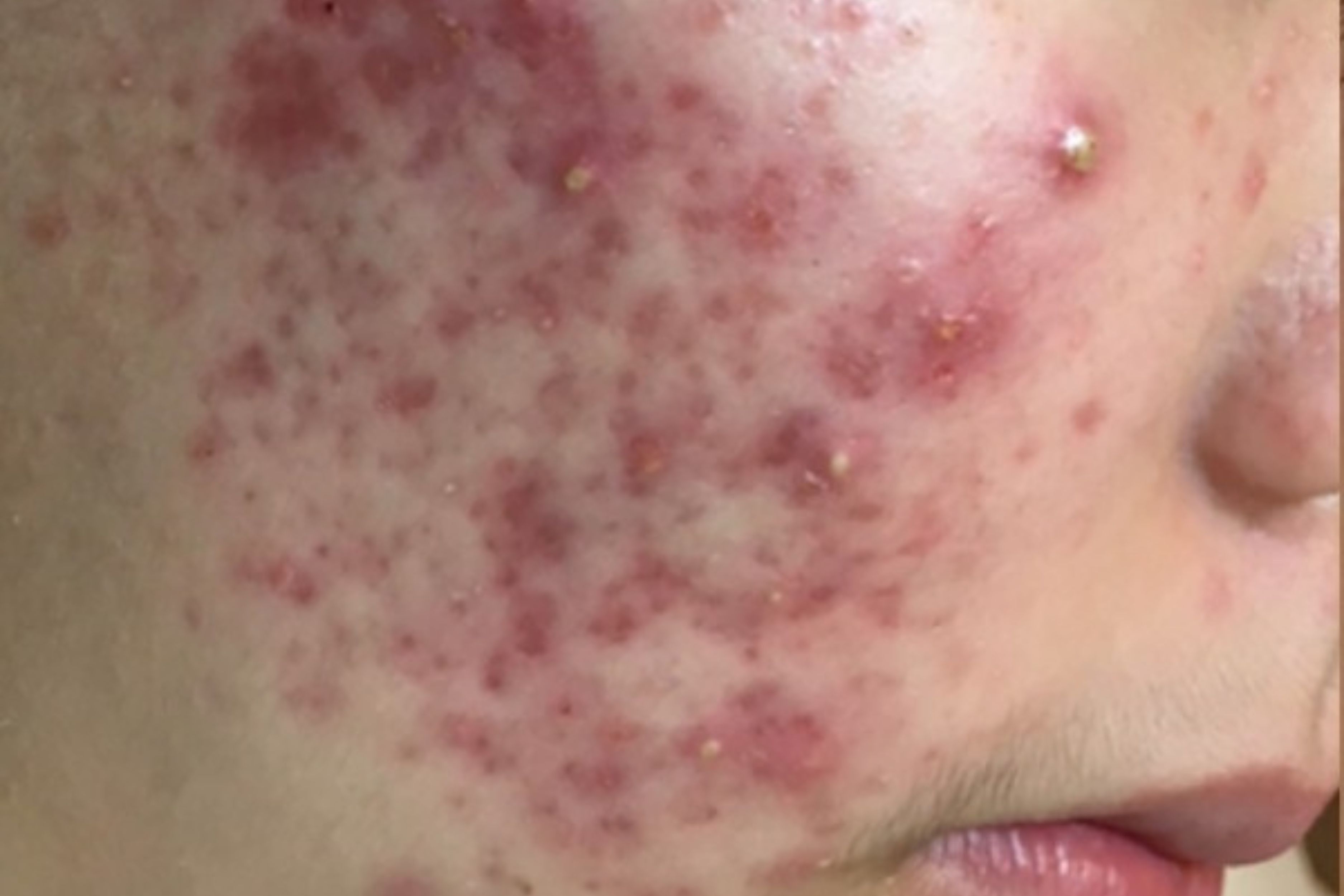
Stage 3: Advanced Clinical Modalities Explained
To resolve distinct scar vectors, clinical dermatology deploys specialized mechanical and thermal parameters tailored to separate depths of skin deficit:
⚡ Surgical Subcision (Fibrous Anchor Release)
Primary Clinical Indications: Rolling scar waves, deep structural tissue collapse, and stubborn subcutaneous scar tissue anchoring.
Medical Mechanism: As established, the core restriction of rolling depressions does not reside on the epidermis. Instead, rigid fibrous strands pull down the surface like tight ropes. Subcision employs a highly precise clinical technique where the physician manually guides a micro-needle or specialized cannula horizontally beneath the dermis to sever these down-pulling anchors. Once released from this downward strain, the skin matrix naturally lifts and flattens.
.jpg)
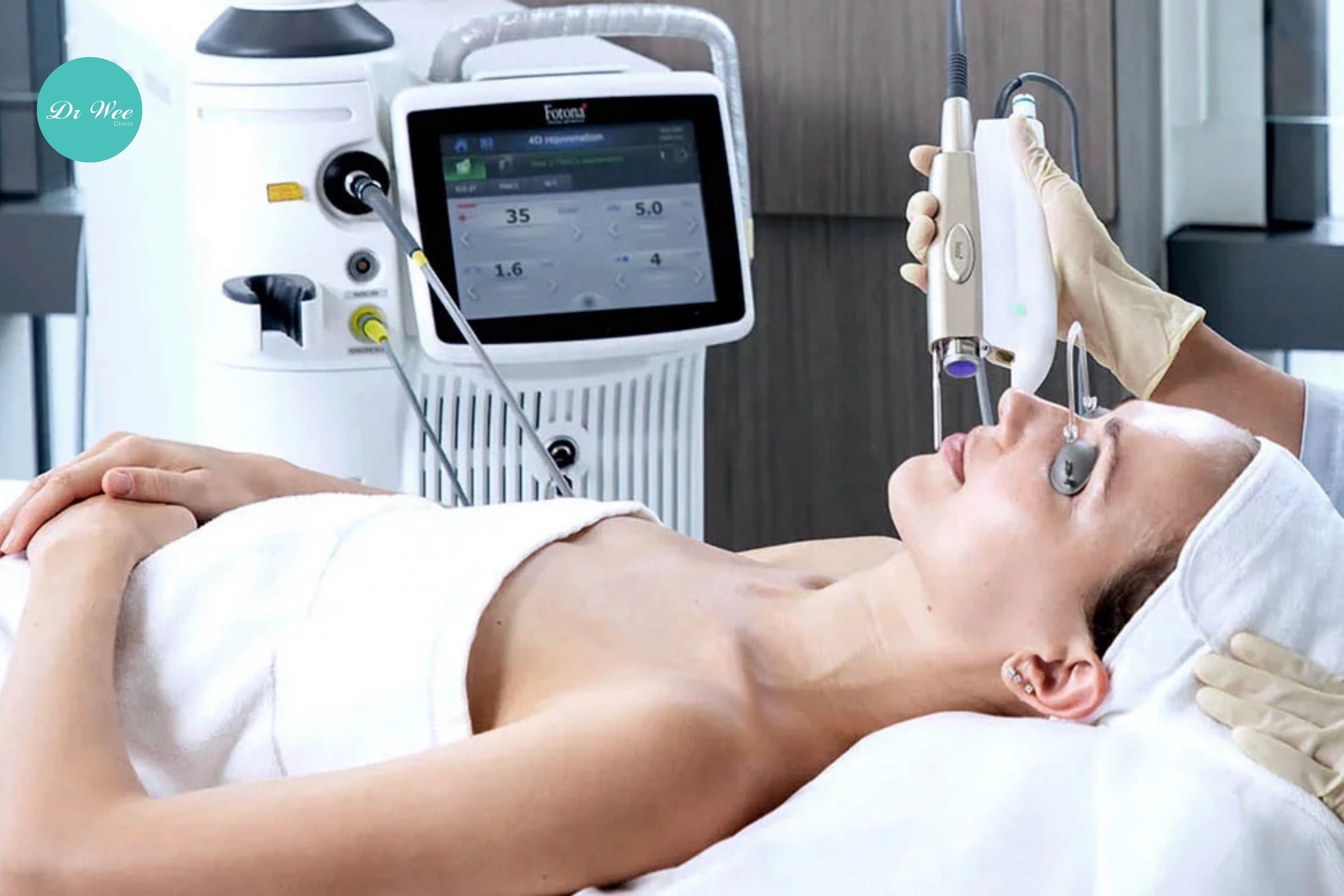
⚡ Laser Therapy (Fractional Resurfacing)
Primary Clinical Indications: Well-demarcated boxcar craters, narrow ice pick tracts, enlarged atrophic pores, and uneven skin texture.
Medical Mechanism: Employs ablative or non-ablative fractional photothermal interactions to create controlled, matrix-mapped micro-injuries in the skin. This process vaporizes and contours the sharp, steep walls of boxcar scars while conducting deep thermal stimulation into the dermis. This driving force prompts continuous collagen synthesis to gradually fill out deep depressions from within.
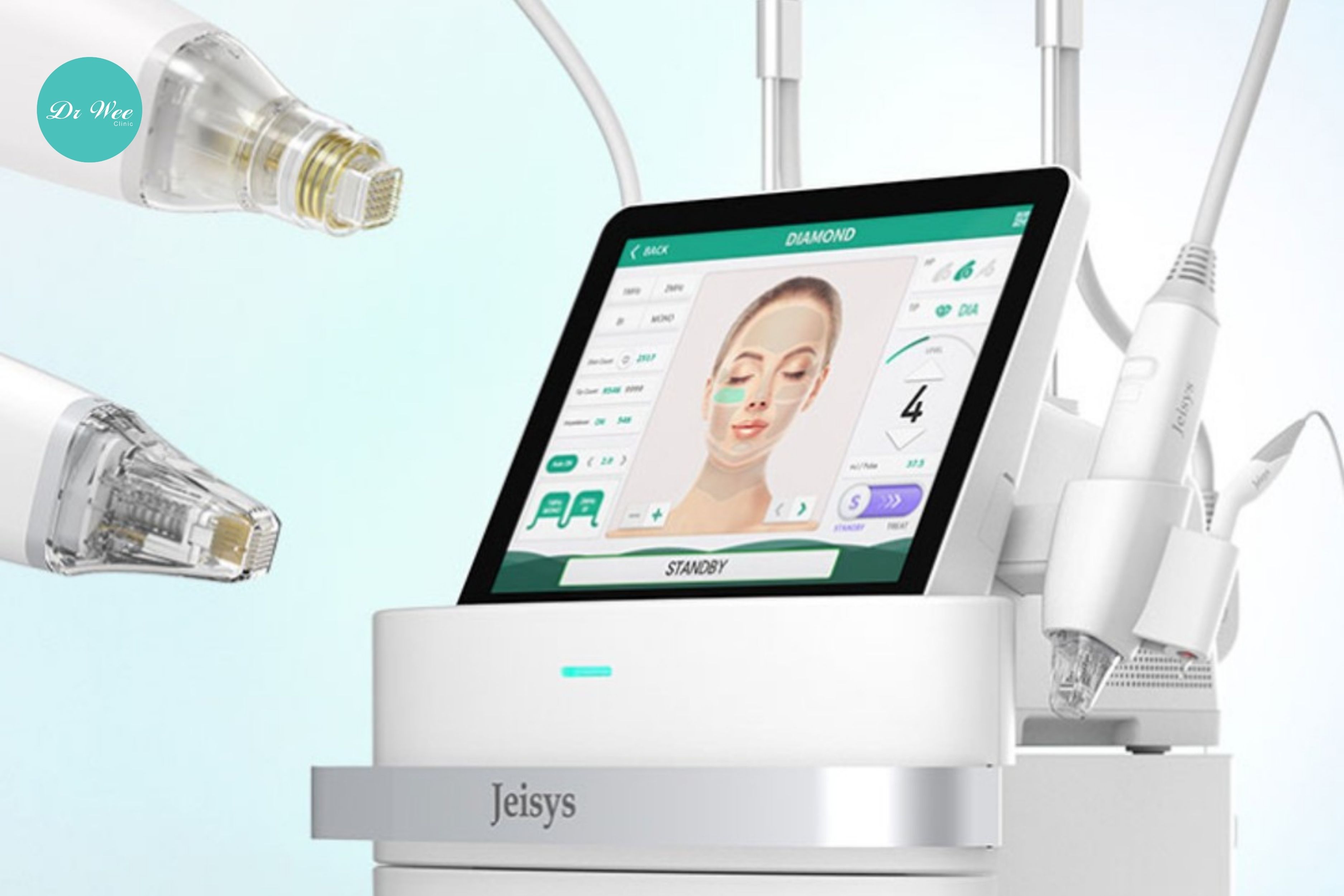
⚡ RF Microneedling (Dermal Radiofrequency Therapy)
Primary Clinical Indications: Mild-to-moderate mixed scarring, widespread atrophic pore drop, hyper-seborrheic skin, and overall textural coarseness.
Medical Mechanism: Advanced insulated needle systems (such as Potenza) enter the skin mechanically, releasing targeted pulses of radiofrequency (RF) energy precisely as the needle tips hit the targeted dermal layer. By protecting the epidermis from heat damage, this dual action drives rapid, 3D structural collagen remodeling while safely reducing hyperactive sebaceous glands to regulate sebum production and calm active acne breakouts.
⚡ Regenerative Mesotherapy (Cellular Matrix Infusions)
Primary Clinical Indications: Profound dermal matrix volume loss, post-procedure recovery acceleration, and fragile, compromised skin barriers.
Medical Mechanism: Features advanced biological boosters including Rejuran, Plinest, and ASCE+ Exosomes. Intradermally delivering highly active polynucleotides (PN), PDRN, and stem-cell-derived growth factor peptides directly into the mesoderm restores exhausted cellular health. This protocol serves as an essential companion, providing the structural nutrients needed to fuel the neocollagenesis triggered by lasers and microneedles.
.jpg)
Frequently Asked Questions | FAQ
Answer: From a strict pathological perspective, the clinical objective of acne scar correction is to maximize deep dermal volume replenishment and eliminate the structural depth gap between depressions and surrounding healthy skin. Reaching an absolute 100% smooth restoration depends significantly on your baseline scar morphology, scar age, anchor density, and individual cellular regeneration capabilities. Through tailored combination layered protocols, patients consistently secure profound, highly visible texturing improvements.
Answer: For rolling scar patterns tethered by deep, tight subcutaneous fibrous anchors, surgical subcision stands out as one of the most immediate clinical methods for lifting skin depressions. However, because the vast majority of acne-recovering profiles display mixed complexes, a comprehensive multi-tier strategy treating depth boundaries, sharp margins, and cell nutrition simultaneously will always deliver faster and superior results compared to any single treatment.
Answer: Dermal matrix remodeling, cellular activation, and global collagen synthesis follow a gradual biological cycle; severe atrophic depressions cannot be completely resolved in a singular treatment session. Clinical data establishes that most moderate-to-severe scar profiles require a structured program of 3 to 5 sessions, spaced 4 to 6 weeks apart, to secure a reliable new structural foundation and sustain long-term leveling results.